
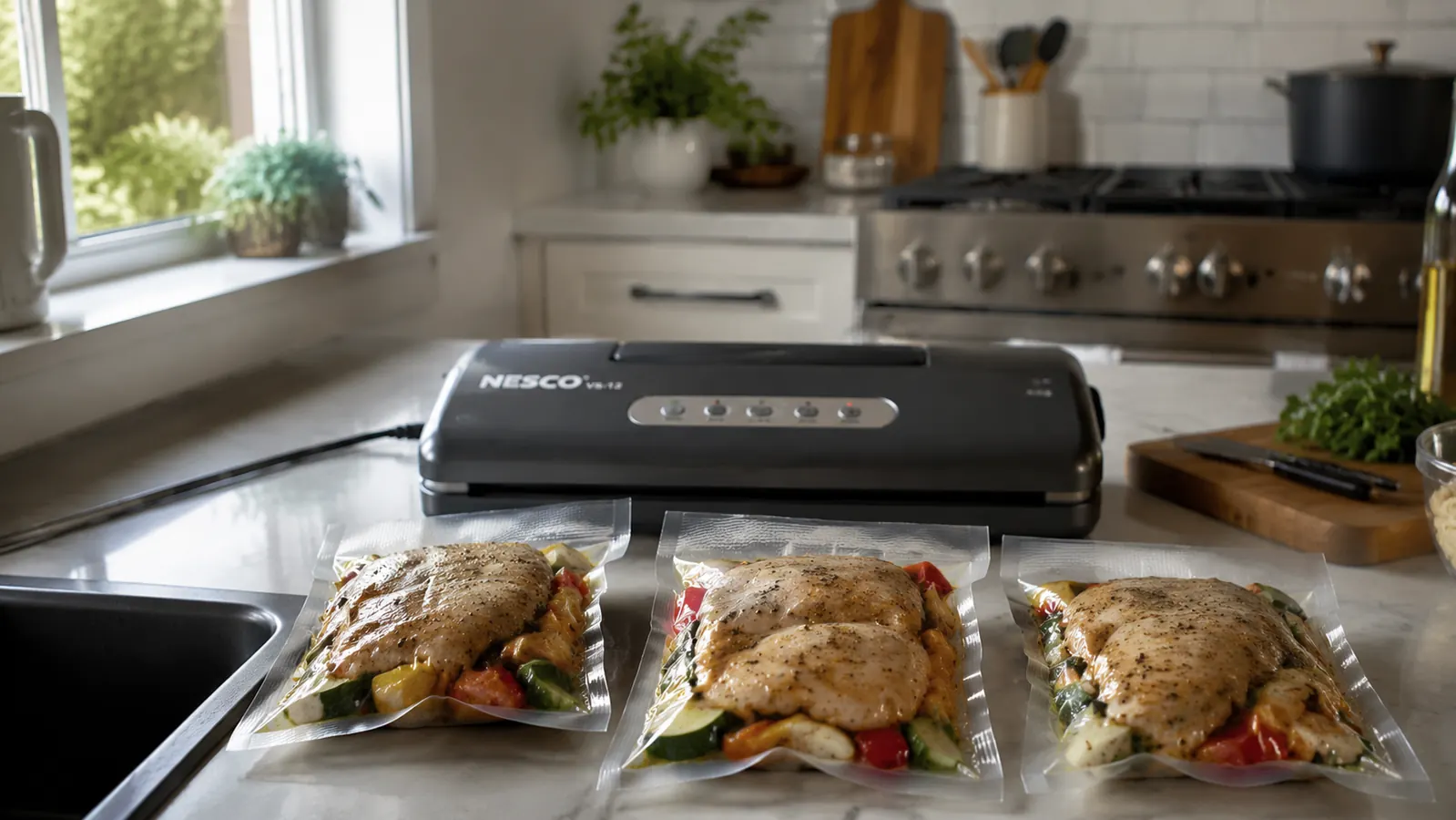
I've been testing kitchen gadgets professionally for twenty years, which mostly means I've thrown a lot of them in a donation box after six weeks. My Nesco VS-12 vacuum sealer is not in that box. It's been on my counter, working, for two years, and before I tell you why it earned that spot, I should tell you what it replaced: two Foodsaver models that both died on me within eight months, and one no-name sealer from a big-box store that started leaking air on the third bag.
This review isn't a spec sheet rewrite. It's what happened when I ran the Nesco VS-12 through roughly 400 sealing cycles across two years of actual weekly meal prep for my household of four, plus the batch cooking I do for recipe testing. Some of it went great. Some of it annoyed me. I'll give you both.
The Quick Verdict
A genuinely durable, kitchen-counter-worthy vacuum sealer that earns its space after two years of weekly use, if you can live with its bulk and its occasional bag-alignment fussiness.
Amazon Check Today's Price →Still sealing bags by hand or babysitting a sealer that quits every winter?
The Nesco VS-12 is the one I stopped replacing. Check today's price and see the current deal on Amazon before you buy another sealer you'll be replacing by next Thanksgiving.
Amazon Check Today's Price on Amazon →How I've Used It
I bought the Nesco VS-12 in the spring of two years ago, right after my second Foodsaver died mid-seal with a half-vacuumed bag of ground turkey still sitting in the chamber. My use case is not casual. I do a Sunday batch cook for my family of four (two teenagers, one of whom eats like a lumberjack), and separately I run recipe tests for freelance food writing work, which means sealing sauces, marinated proteins, and portioned stocks several times a week on top of the Sunday routine.
That's a conservative estimate of four to six seal cycles a week, every week, for about a hundred weeks. I keep a loose log in a kitchen notebook of what I seal and when, mostly so I remember what's actually in my freezer instead of guessing at mystery bags. By that log, the VS-12 has sealed somewhere north of 400 bags: chicken thighs, ground beef, soups, stocks, shredded cheese, coffee beans, and more bags of blanched green beans than I care to admit.
I did not baby this machine. It's lived on an open shelf, not tucked in a cabinet, which means it's taken splashes, flour dust, and the occasional bump from my younger kid running through the kitchen. I mention that because a lot of vacuum sealer reviews are written after two weeks of gentle, careful use. Mine is written after two years of real kitchen chaos, including one memorable incident where it got knocked to the floor from a mixing-bowl collision and kept working like nothing happened.
The Motor and Seal Bar: Where the Cheap Sealers Died
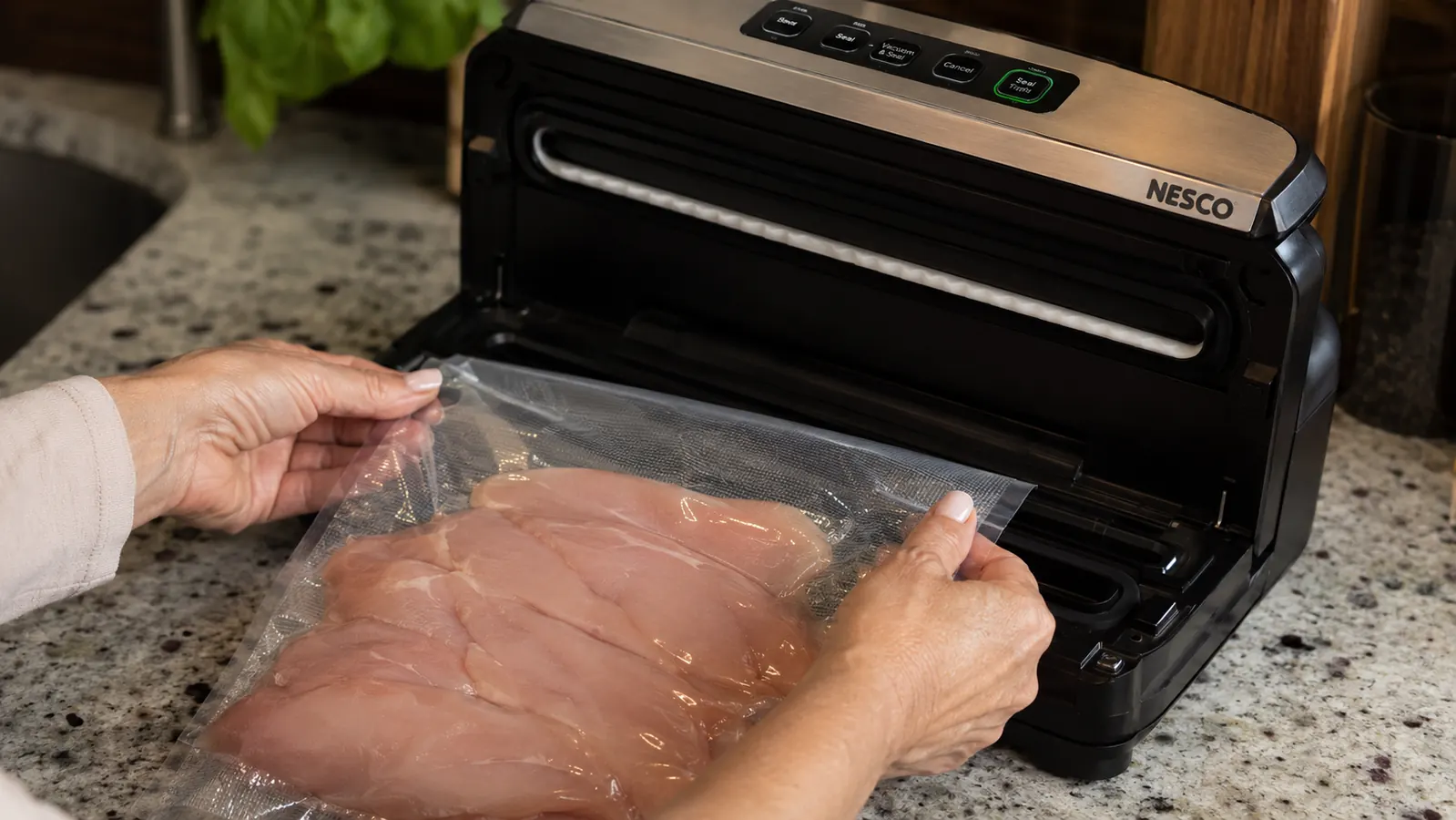
Both of my old Foodsaver units failed the same way: the motor started running hot and loud after about six months, then the seal bar stopped getting hot enough to actually fuse the plastic, which meant bags that looked sealed but weren't. I didn't figure that out until I opened the freezer to a bag of pulled pork covered in ice crystals, which is its own kind of heartbreak when you spent an afternoon on that pork.
The Nesco VS-12 runs a 130-watt motor, and two years in, it still sounds the same as it did on day one. That's the single biggest difference I've noticed compared to the sealers I replaced. I've never once had a bag come out of this machine with a soft or incomplete seal. When I press down on a finished bag, I get that firm, drum-tight surface every time, no hissing air pockets, no soft spots.
The seal bar itself has held its heat consistently. I've never had to run a double-seal pass to fix a weak spot, which was a near-weekly ritual with my last Foodsaver by the time it died. I did replace the foam gasket strips once, around the fourteen-month mark, because they'd started to compress and lose their tackiness. That's a five-dollar part and a two-minute swap, and honestly I expected to need it sooner given how often this thing runs.
The Viewing Lid, and the One Real Annoyance
The clear viewing lid is genuinely useful, not a gimmick. I can see the bag positioned correctly and watch the vacuum draw down before the seal engages, which matters when you're sealing something with liquid, like a marinade or stock, because you can catch it before the liquid gets sucked into the machine and ruins the cycle.
My one real complaint after two years: bag alignment is fussier than it should be. If the bag isn't seated dead-center in the channel, the machine will sometimes vacuum unevenly or fail to catch the full width of the seal, and you find out only after you've already put the bag in the freezer. I've gotten fast at eyeballing it correctly now, but it took me a solid month of trial and error, and probably six or seven wasted bags, to get consistent. If you're the type who wants a foolproof, drop-it-in-and-forget-it experience, this isn't quite that.
The unit is also bigger than I expected from the online photos. It takes up a genuine foot of counter space, and I don't love that it doesn't tuck away easily given how heavy it is (just over eight pounds). I've made peace with it living on an open shelf permanently, but if your kitchen is tight, measure your space before you commit.
Bags, Accessories, and the Costs Nobody Mentions
One thing I wish someone had told me before I bought my first vacuum sealer, any brand, is that the machine itself is only half the ongoing cost. Bags are the real recurring expense, and the VS-12 uses standard-width embossed roll bags, which means I'm not locked into one manufacturer's proprietary cartridge system. I buy rolls in bulk a few times a year and cut them to whatever length I need, which has saved me real money compared to pre-cut bag boxes.
The included accessory kit came with a starter roll, a handful of pre-cut quart and gallon-size bags, and a hose attachment for canisters, which I use for dry goods like flour, rice, and coffee beans more than I expected to. Two years later, the hose attachment still works fine, though the plastic canister lids I bought separately have started to warp slightly with repeated use, so that's a part I'd budget to replace eventually.
The other real cost is the learning curve on bag length. I wasted a fair number of bags in the first month cutting them too long or too short before I settled into a rhythm of measuring against the food first. If you've never used a roll-style sealer before, budget a little patience and a little scrap plastic for the first few weeks.
What I Considered Before Buying, and Why I Didn't Switch
Before I settled on the VS-12, I looked hard at a newer Foodsaver model with automatic bag detection, and at a chamber-style sealer that a restaurant-owner friend swears by. The automatic Foodsaver was tempting on paper, but two failed units from that brand already sitting in my memory made me hesitant to give them a third try, and the reviews I read at the time described the same slow seal-bar decline I'd already lived through twice.
The chamber sealer was the more serious temptation. It seals liquids without a hitch and doesn't care about bag alignment the way an external sealer does. But it's a genuinely different category of machine, both in price and in counter footprint, and it's overkill for a home kitchen unless you're sealing liquid-heavy items constantly. For the volume and variety I seal, an external sealer with a strong motor made more sense, and two years of the VS-12 not failing has confirmed that was the right call for my kitchen, even with its bag-alignment quirks.
I also priced out a couple of budget handheld sealers as a backup for travel and camping trips. I ended up buying one of those too, and it's fine for its narrow purpose, but it's not a replacement for the VS-12's sealing strength on anything meant to sit in a freezer for months. They solve different problems.
Cost Over Time, and Where It Actually Saved Me Money
I'm not going to pretend a vacuum sealer is a small purchase, and I won't quote you what I paid since prices shift, but I will tell you how I think about the math now. Between my two dead Foodsavers and the failed no-name unit, I'd already spent more replacing sealers than the VS-12's current price on Amazon, and none of those machines lasted even a full year.
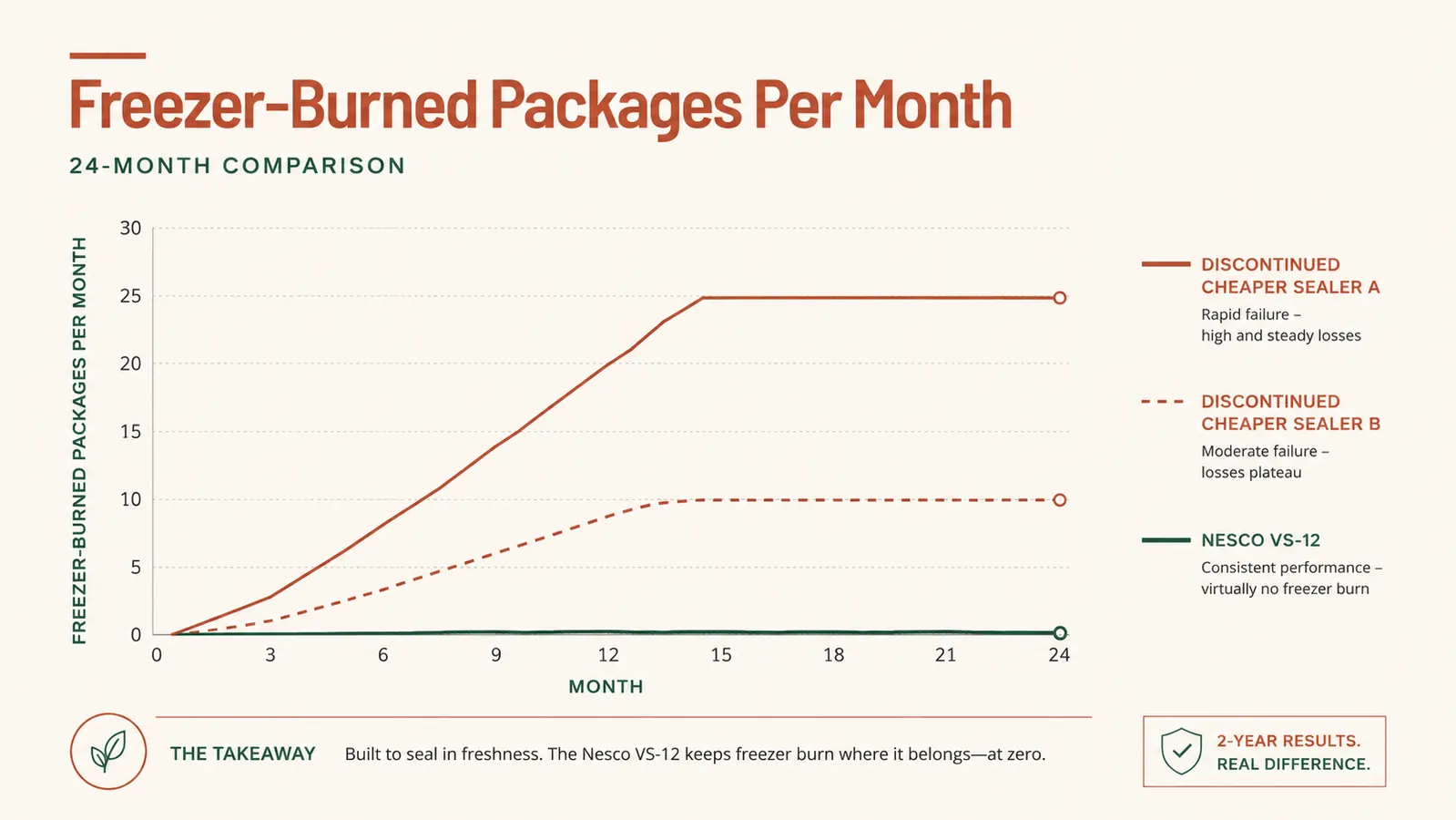
The bigger savings, honestly, is in food I didn't throw away. Before I sealed things properly, I estimate I tossed a genuinely embarrassing amount of freezer-burned meat and produce every few months, the kind of loss you don't total up until you actually try. With the VS-12, freezer burn has essentially stopped being a problem in my house. I buy meat in bulk when it's discounted, portion it the same day, and seal it within the hour. Two years later, I can't remember the last time I opened a bag to find that grayish, ice-crusted texture that means the food is done for.
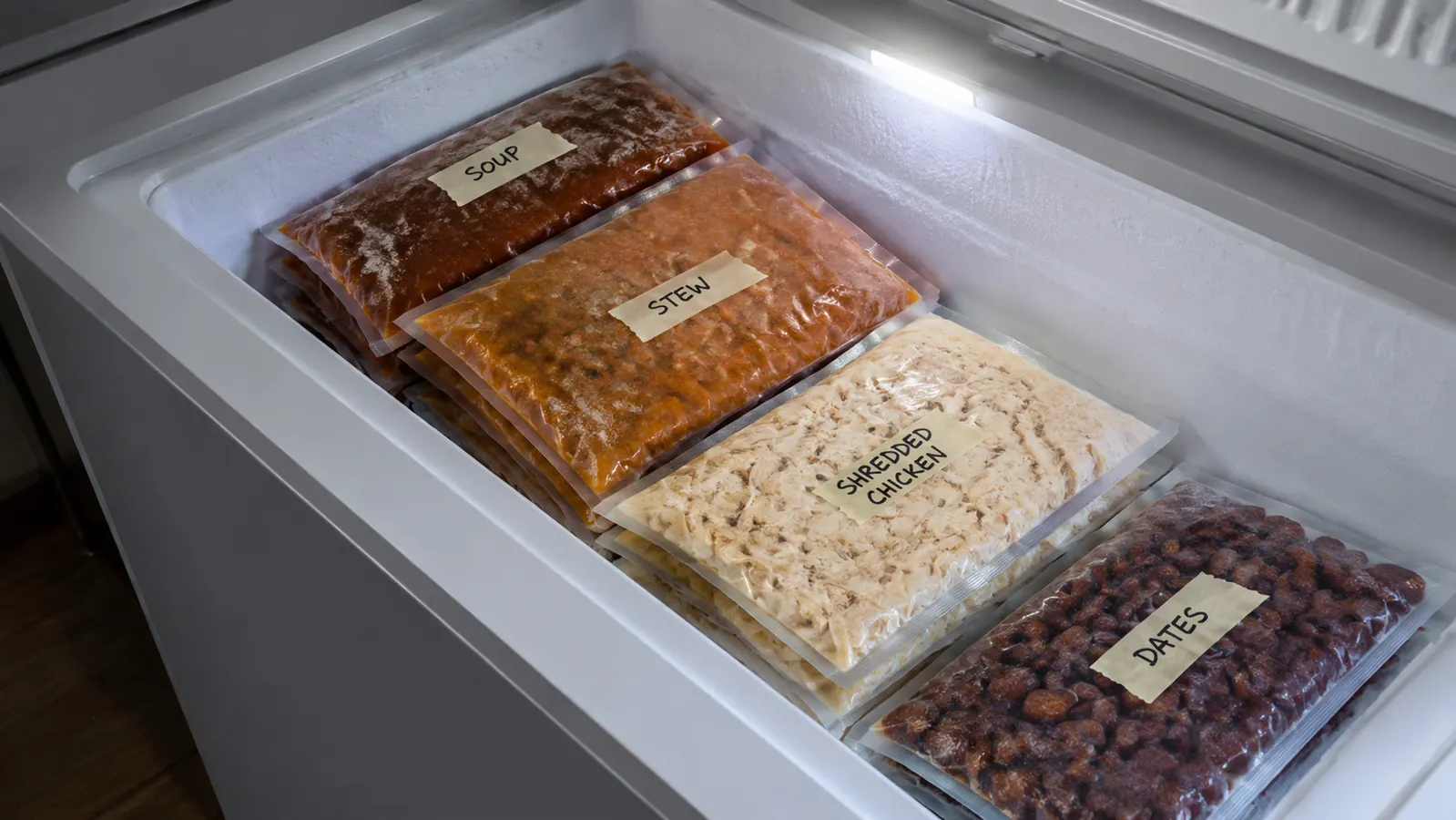
It's also changed how I batch cook. Soups, stocks, and sauces freeze flat and stack like books, which sounds like a small thing until you've tried to Tetris a chest freezer full of round containers. That alone has probably saved me an hour a week of freezer archaeology looking for what I actually have on hand.
What I Liked
- Motor and seal bar have held up through roughly 400 cycles over two years with zero failed seals
- Clear viewing lid lets you catch liquid or alignment issues before the cycle finishes
- Firm, consistent seals every time, no soft spots or slow air leaks in the freezer
- Uses standard roll bags instead of a proprietary cartridge system, keeping ongoing costs down
- Replacement gaskets are cheap and take about two minutes to swap
- Genuinely stopped freezer burn in my household, which was the whole point of buying it
Where It Falls Short
- Bag alignment is fussier than it should be and takes real practice to get consistent
- Larger and heavier than it looks in photos, roughly a foot of permanent counter space
- No auto bag-detection, so you have to start each cycle manually
- Louder than I expected during the vacuum draw, not a quiet-kitchen appliance
- Canister lids for dry goods have warped slightly with repeated use
When I press down on a finished bag, I get that firm, drum-tight surface every time. That's the difference two years bought me.
Who This Is For
If you batch cook regularly, buy meat in bulk, or freeze soups and sauces more than once a month, this machine will pay for the counter space. It's also a good fit if you've already been burned (pun intended) by a cheaper sealer that quit within a year, since durability is genuinely where the VS-12 separates itself. Anyone doing sous vide cooking will also appreciate the consistent seal quality, since a weak seal ruins a water bath cook fast.
Who Should Skip It
If you seal a bag or two a month and have a tiny kitchen with no spare counter space, a compact handheld sealer will probably serve you better and take up a drawer instead of a shelf. And if you want a machine that automatically senses the bag and starts itself, look elsewhere. The VS-12 rewards a little bit of manual technique, and if that's not something you want to learn, the fussier alignment will frustrate you before you get the hang of it.
Two years, 400 bags, zero failed seals. That's the track record I'd want before buying.
If you're tired of replacing a vacuum sealer every winter, check today's price on the Nesco VS-12 and see if it's still in stock at the current deal.
Amazon Check Today's Price on Amazon →