
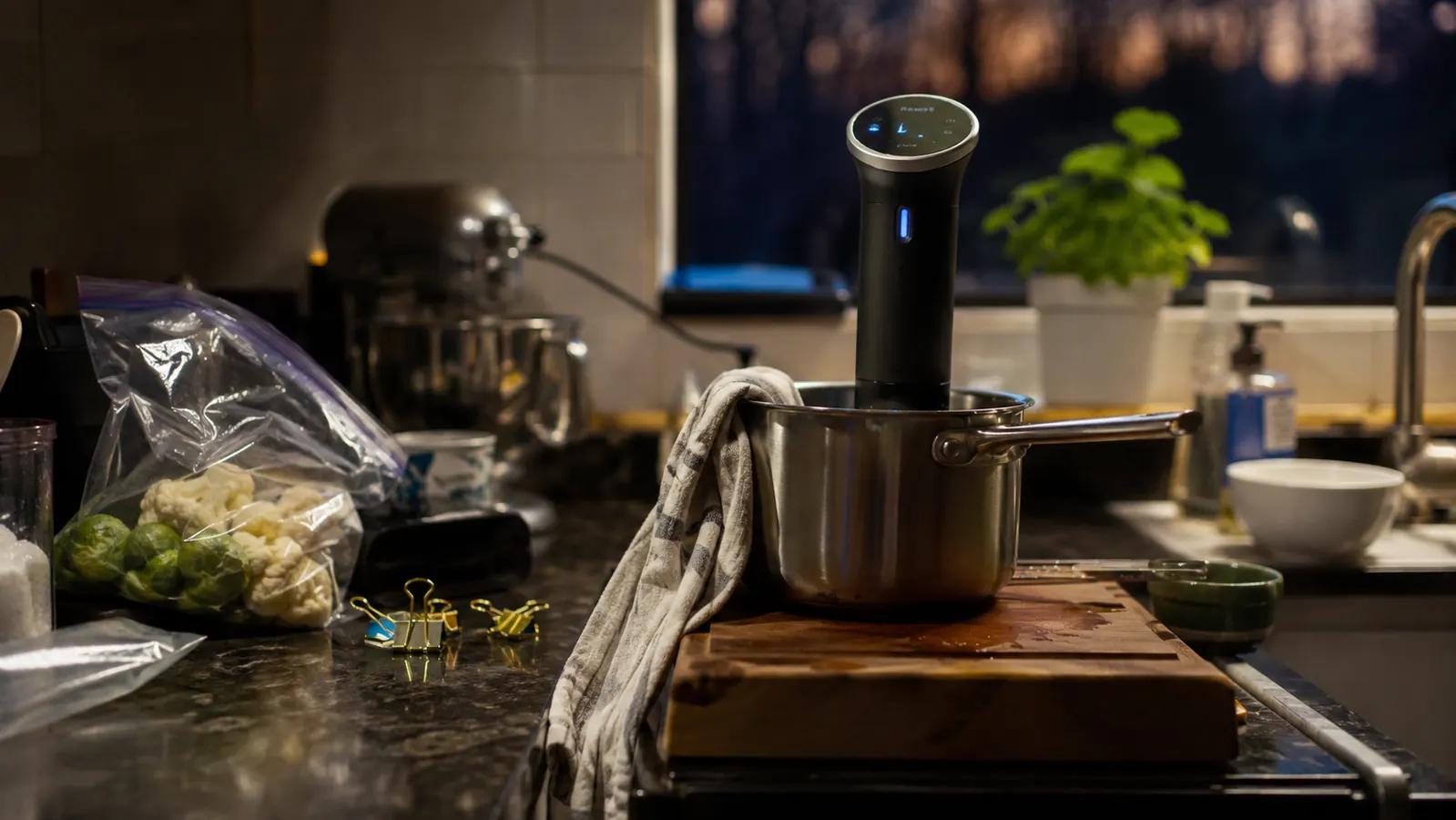
Every glowing Anova Precision Cooker review you'll find online stops at the unboxing. The first steak comes out perfect, the photos look great, the reviewer signs off. Nobody sticks around for month five, when the excitement has worn off and the machine either earns its spot in your kitchen or gets shoved to the back of a cabinet. I've been recipe-testing gadgets for twenty years, and I only trust a review once the honeymoon phase is over. This one is about everything that happened to my Anova Precision Cooker 2.0 after the first week of showing it off to anyone who'd watch.
I'm not walking this back into a hit piece. The circulator works. Water temperature holds steady, the interface is simple enough that my husband uses it without asking me a single question, and I've genuinely changed how I cook a handful of proteins because of it. But there's a stack of small, unglamorous frustrations that nobody mentions in the five-star Amazon reviews or the influencer unboxings, and those are the things that actually determine whether a $98 gadget earns a permanent spot on your counter or ends up in a donation box eight months later. This review exists to fill in that gap.
The Quick Verdict
A dependable circulator once you learn its quirks, but the honeymoon-phase reviews leave out enough real friction that I felt obligated to cover it here.
Amazon Check Today's Price →Skip the honeymoon phase and go straight to knowing what you're buying
The Anova Precision Cooker 2.0 holds its temperature reliably once you know its quirks. Read the whole review, then decide if today's price is worth it for your kitchen.
Amazon Check Today's Price on Amazon →How I Actually Use It, Not How the Box Says To
The box photos show the clamp sitting neatly on a tall, wide stockpot with plenty of clearance. My real kitchen has a narrower 8-quart pot that lives on the same shelf as everything else, and the clamp only fits it at an angle that makes me nervous every single time I fill it past the halfway mark. I've since bought a cheap plastic lid with a pre-cut circulator slot, which solved the wobble but added one more single-purpose item to a drawer that was already too full.
I run it two or three times a week, mostly for salmon, lamb chops, and the occasional batch of hard-boiled eggs when I'm meal-prepping for my daughter's lunches. Salmon in particular changed my opinion of the machine early on, a 30-minute bath at 126 degrees gives a texture you genuinely cannot get in a pan without babysitting it, and I don't miss the smell of fish frying up my whole downstairs.
What surprised me wasn't the cooking itself, it was the logistics around it. Sous vide isn't a dump-and-walk-away tool the way a slow cooker is. You still have to plan a sear afterward, you still need bags and a way to seal them, and you still need counter space for a pot that's going to sit there for anywhere from thirty minutes to overnight. That planning tax is real, and it's the first thing nobody warns you about before you buy.
I also underestimated how much this shifted my grocery shopping. Once I knew a $6 lamb chop could come out restaurant-tender with almost no skill required, I started buying cuts I used to avoid because I didn't trust myself to cook them well. That's a real, ongoing effect on my weekly routine, not a one-time party trick, and it's the honest reason the machine has stuck around this long instead of getting boxed up.
The Stuff Nobody Mentions in the Unboxing Video
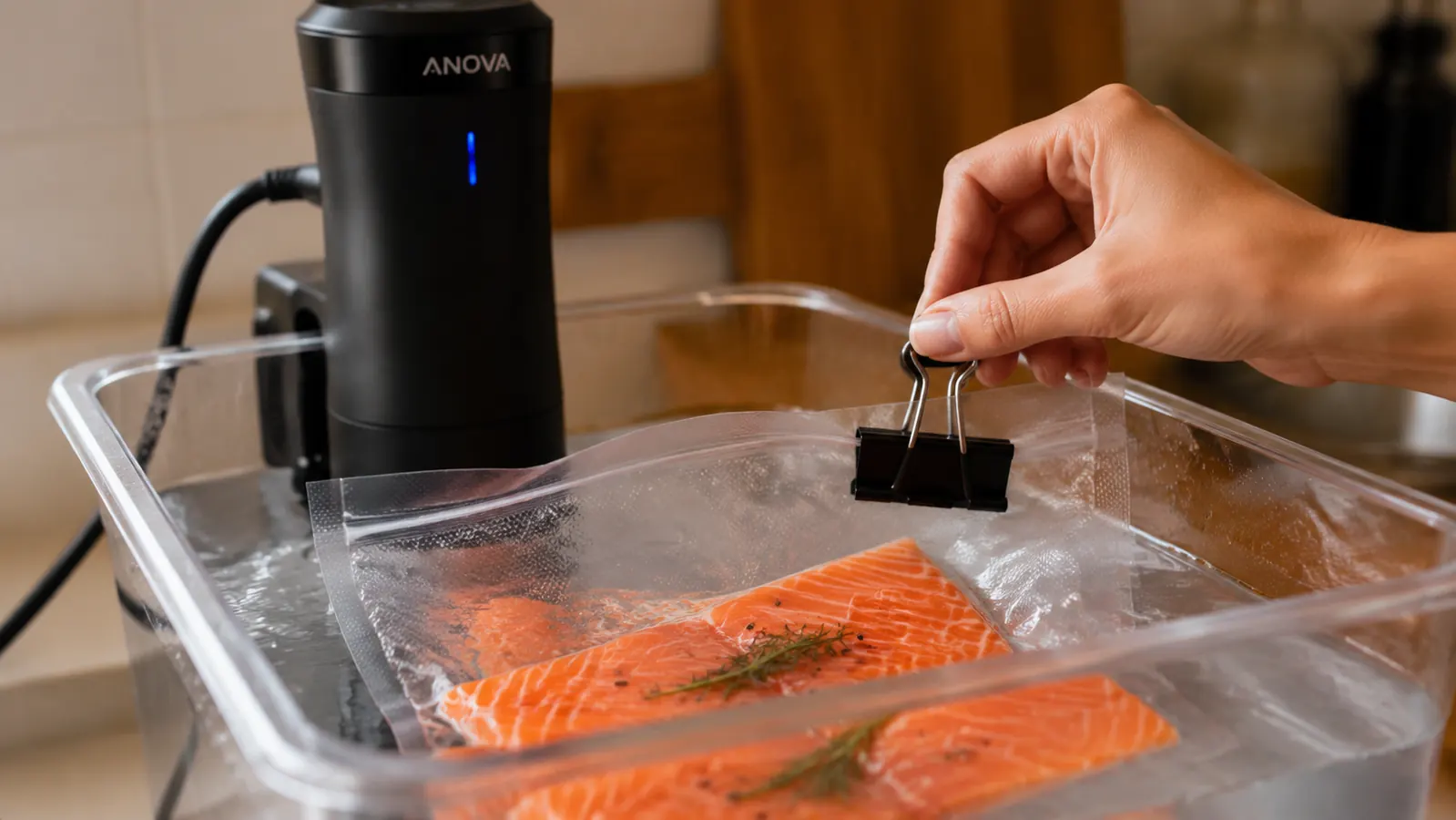
Bags float. This sounds obvious once you know it, but the first time I tried a salmon fillet, the bag bowed up at the surface no matter how carefully I'd pressed the air out by hand, and half the fillet cooked above the water line at room temperature instead of in the bath. I now keep a small tin of binder clips in the drawer next to the circulator specifically to weigh bags down against the side of the pot, a fix I found on a forum, not in Anova's own materials.
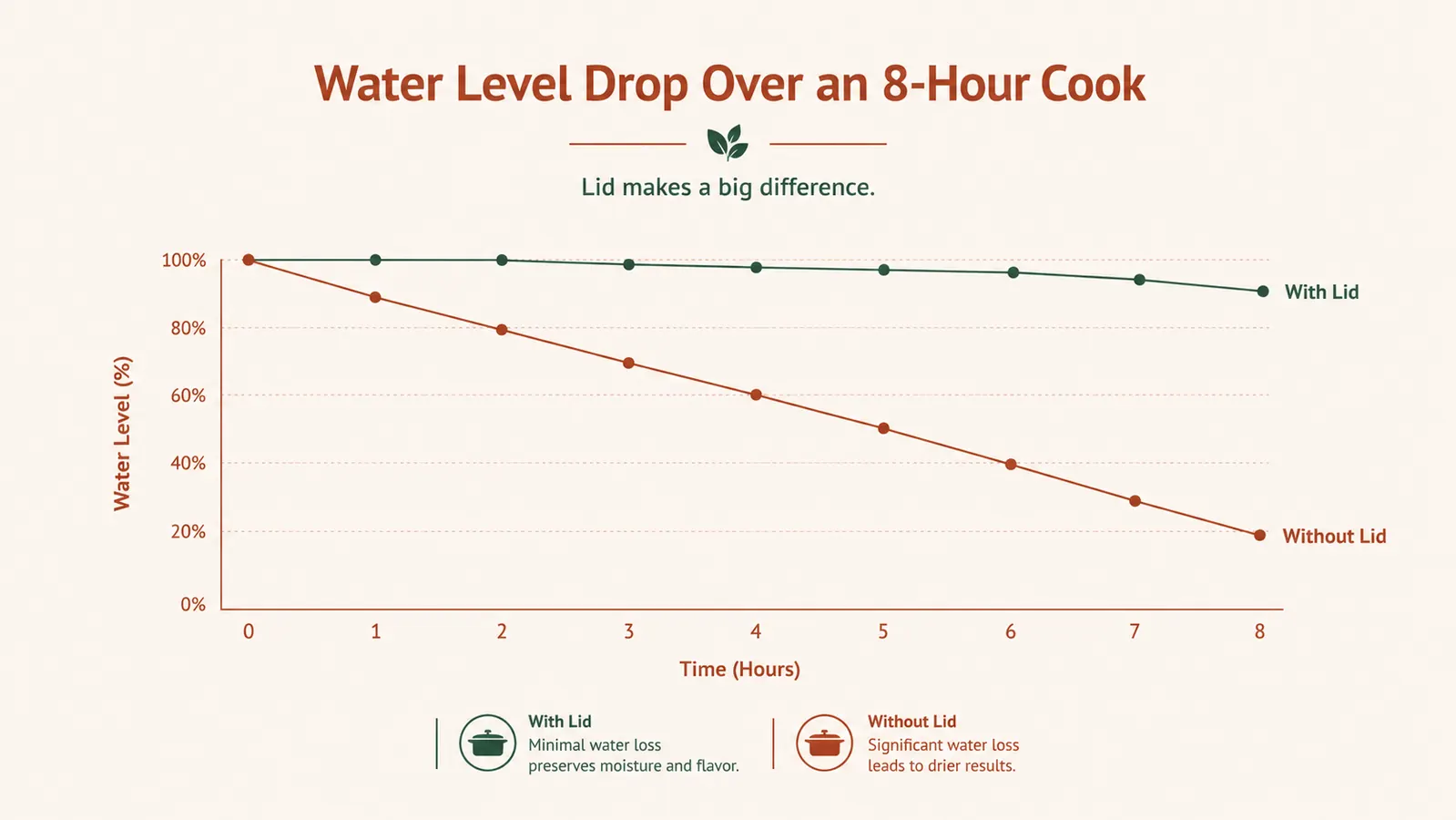
Water evaporates faster than you'd expect on longer cooks. An 8-hour short rib bath without a lid can drop the water level enough to expose the intake, which trips a low-water warning and can pause your cook while you're at work or asleep. I didn't realize this until it happened to me on a Sunday afternoon, and I came back to a bath that had shut itself off two hours early. A cheap silicone lid or even plastic wrap over the top solves it, but it's a $12 add-on purchase the marketing never mentions.
The motor is louder than I expected, not obnoxious, but a steady hum plus the rush of moving water that's noticeable in a quiet house at 9pm. If you're running an overnight cook near a bedroom, plan on closing a door. It's a small thing, but small things are exactly what long-term reviews are supposed to catch and short ones skip.
Condensation was the last surprise. On humid summer nights, the outside of the pot sweats enough to leave a ring of water on my counter and, once, a small drip down the front of my cabinet that I didn't notice until the wood finish had a faint water mark. I keep a folded dish towel underneath the pot now as a habit, something no unboxing video ever thinks to mention.
Where It Actually Struggled
Vegetables were my biggest letdown. I tried carrots and corn on the cob expecting the same magic I'd gotten from proteins, and both came out with a strange, uniformly soft texture that none of my family liked, closer to canned than roasted. Sous vide is genuinely excellent for meat, fish, and eggs, but I've stopped recommending it as a general-purpose cooking method because the vegetable results just aren't worth the extra bag and clip and water.
Getting a real crust after the bath took me longer to figure out than I'd like to admit. My first few lamb chops came out perfectly cooked inside and gray and steamed-looking on the outside because I didn't pat them dry enough or wait for my pan to get properly screaming hot before searing. That's not really the machine's fault, but it's a skill nobody tells you comes bundled with the purchase, and it took me a solid month of trial runs to get consistently right.
Larger cuts also expose a real limitation. A whole pork shoulder or a big batch of thighs needs a pot bigger than what most kitchens have room for, and once you're filling an 8-quart pot with two racks of ribs, the water displacement gets messy and the circulation gets uneven near the edges. For weeknight portions it's fine. For feeding a crowd, I still reach for the oven.
The App: More Friction Than Anyone Admits
You don't strictly need the Anova app, but the setup process nudges you toward creating an account before the device fully behaves, which felt like an unnecessary hurdle for a countertop appliance that should just work out of the box. I had to update the firmware within the first ten minutes of ownership, standing in my kitchen watching a progress bar before I could cook the dinner I'd already prepped.
Once it's connected, the push notifications are genuinely handy, I'll give it that. But the WiFi connection has dropped on me three separate times over several months, always during a router reboot or an internet outage, and each time the physical unit kept cooking just fine on its own. The app is a convenience layer, not a dependency, and I wish the setup process made that clearer instead of implying you need it from day one.
The recipe library inside the app also leans on generic, safe temperatures that don't always match how my family actually likes things done. I've largely stopped opening it for that reason and rely on my own notes instead, jotted on an index card taped inside the cabinet where the circulator lives. That's not a knock unique to Anova, most appliance apps have this problem, but it's worth knowing before you count on it as a real feature rather than a bonus.
Cleanup and Storage, the Unglamorous Part
The circulator itself is not dishwasher safe, and you're supposed to hand wash and dry the lower section after every use, which is a minor extra step compared to tools that just go straight into the dishwasher rack. It's not hard, but it's one more thing standing between you and being done with dinner, and on a busy weeknight that matters more than the spec sheet lets on.
Storage is its own small headache. The unit is tall and oddly shaped, not something that stacks neatly with other appliances, and I ended up dedicating a specific drawer slot to it because it kept tipping over sideways in the cabinet where I first tried to store it. If your kitchen storage is already tight, factor that in before you buy, because the marketing photos never show you where the thing actually lives.
The Six-Month Gut Check
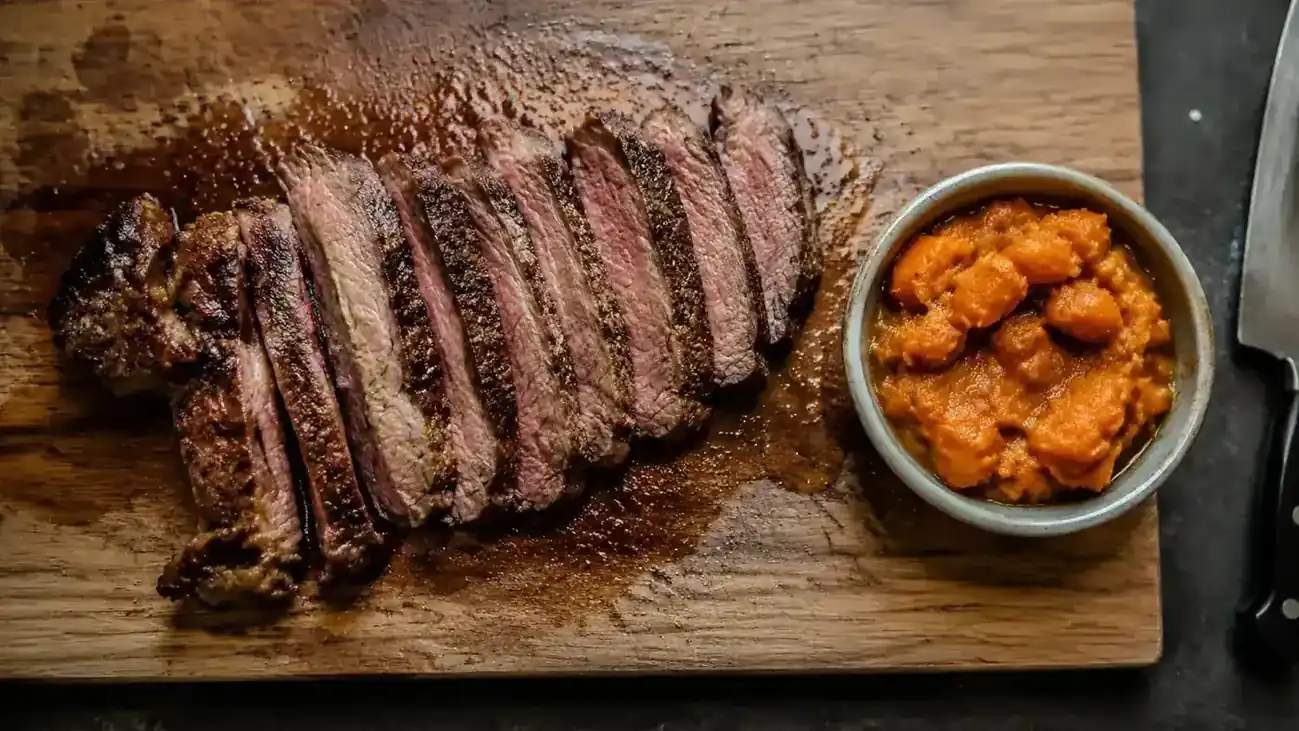
Six months in, I asked myself the question that actually matters: would I buy this again knowing everything I know now, not the polished version from the box, but the real one with the binder clips and the dish towel underneath it. The honest answer is yes, but with a caveat I didn't expect to have. I'd buy it again for exactly what it's good at, and I'd go in already planning for the accessories nobody bundles with it instead of discovering them one frustrating cook at a time.
What changed most between week one and month six wasn't my opinion of the machine, it was my expectations of it. Early on I treated it like a magic box that would fix every dinner on its own, no matter what I threw into the bag. Now I treat it like what it actually is, a very good tool for a specific set of jobs, salmon, eggs, chops, tenderloin, that I reach for deliberately rather than by default. That shift in mindset did more for my satisfaction with this purchase than any firmware update ever did.
I also stopped comparing it to my slow cooker, which was an unfair comparison from the start. A slow cooker forgives you. This machine rewards you for showing up and finishing the job with a proper sear, a dry surface, and a hot pan. Once I accepted that the circulator is only half the meal, not the whole thing, the frustration I felt in those first few weeks mostly disappeared, and what was left was a gadget I actually trust.
What I Liked
- Holds water temperature accurately once you learn the setup quirks
- Genuinely transforms salmon, eggs, and smaller cuts of meat
- Physical controls keep working even when WiFi drops
- Simple enough interface that my husband uses it unsupervised
- Changed which cuts I'm willing to buy at the grocery store
Where It Falls Short
- Bags float and need binder clips or weights, not mentioned in the box
- Long cooks lose water fast without an aftermarket lid
- Vegetables come out mushy, not worth the extra step
- Requires an account and firmware update before first use
- Not dishwasher safe, needs hand washing after every cook
- Awkward shape makes cabinet storage more annoying than expected
The reviews that stop at the first perfect steak are leaving out the binder clips, the evaporating water, and the month it took me to actually get a decent crust. That's the part worth knowing before you buy.
Who This Is For
If you already cook proteins several nights a week and you're tired of guessing whether your chicken or salmon is actually done, the Anova earns its keep once you know its quirks. It's best for people who don't mind a small learning curve and who are willing to buy a $12 lid and keep a tin of binder clips in a drawer. If precise, repeatable doneness on meat, fish, and eggs matters more to you than convenience straight out of the box, this is a solid, honest purchase at today's price.
Who Should Skip It
If you're hoping for a set-it-and-forget-it appliance the way a slow cooker is, or if your kitchen only has a shallow, narrow pot with nowhere to store one more single-purpose gadget, I'd think twice. Skip it too if vegetables are most of what you cook, since that's the category where this machine let me down the most. It rewards people who are willing to work around its rough edges, not people looking for zero friction out of the gate.
Now that you know the real quirks, decide for yourself
Every honeymoon-phase review skips the binder clips and the evaporating water. If the tradeoffs here still sound worth it for your kitchen, check today's price and see the current listing.
Amazon Check Today's Price on Amazon →